
Choosing the right tennis racquet grip size profoundly impacts performance and comfort, yet remains surprisingly overlooked. Grip size influences control, power, and injury prevention.
Establishing a proper grip is crucial; evidence suggests a correlation between grip size and performance, though definitive proof is still emerging within the sport.
What is Grip Size and Why Does it Matter?
Grip size refers to the circumference of the handle on a tennis racquet, typically measured in fractions of an inch (e.g., 4 1/8, 4 1/4). It’s a fundamental aspect of racquet customization, often underestimated by players. A correctly sized grip allows for a relaxed handhold, maximizing racquet head speed and minimizing tension.
Incorrect grip size can lead to a death grip, restricting wrist movement and reducing power. It also increases the risk of injuries like tennis elbow. Finding the optimal grip size enhances control, feel, and overall performance on the court, contributing to a more enjoyable and effective game.
The Impact of Incorrect Grip Size on Performance
An improperly sized grip significantly hinders a player’s ability to generate power and maintain control. A grip that’s too small forces a tighter hold, restricting wrist flexibility and reducing racquet head speed – crucial for powerful shots. Conversely, a grip that’s too large promotes a loose hold, diminishing feel and precision.
This leads to compromised shot-making, increased errors, and decreased consistency. Furthermore, incorrect grip size contributes to muscle fatigue and elevates the risk of overuse injuries, ultimately impacting long-term performance and enjoyment of the game.

Determining Your Grip Size
Accurately assessing your grip size is fundamental for optimal play. Methods include measuring your hand with a ruler or utilizing the palm measurement technique for precision.
The Traditional Measurement Method (Using a Ruler)
This classic technique involves measuring the distance from the tip of your ring finger to the second crease in your palm. Extend your hand as if shaking someone’s hand, then use a ruler to determine the measurement in inches.
Convert this measurement to grip size using a standard chart. For example, 4 1/4 inches typically corresponds to a grip size of 4 1/4″. It’s vital to measure both hands, as slight variations can occur. Choose the size that feels most comfortable and secure.
Remember to measure while holding a racquet as your hand naturally wraps around the grip, ensuring an accurate assessment for optimal performance and comfort during play.
The Palm Measurement Method
An alternative to using a ruler, the palm measurement focuses on the width of your open hand. Close your hand as if gripping a racquet, then measure across the palm from the fleshy part of your thumb to the base of your little finger.
This measurement, typically in inches, provides a good indication of your ideal grip size. Consult a grip size chart to correlate your palm width with the appropriate grip. This method is often considered more intuitive for beginners.
Ensure your hand is relaxed and naturally curved during measurement for the most accurate result, leading to a comfortable and effective grip on the court.
Understanding Grip Size Numbering System (4 1/8, 4 1/4, etc.)
Tennis racquet grip sizes are denoted in fractions of an inch – 4 1/8, 4 1/4, 4 3/8, and 4 1/2 being the most common. These numbers represent the circumference of the grip, not the width.
A larger number indicates a thicker grip. The 4 1/4 inch grip is often considered a standard size, suitable for many players. Smaller grips (4 1/8) are favored by those with smaller hands, while larger grips (4 3/8 or 4 1/2) suit larger hands.
Understanding this system is vital for selecting a grip that feels comfortable and allows for optimal control and power during play.

Grip Sizes for Different Hand Sizes
Optimal grip size varies significantly based on hand dimensions. Men, women, and juniors typically require different sizes for comfortable play and effective racquet control.
Grip Sizes for Men
Generally, most adult men find their ideal grip size falls within the range of 4 1/4 to 4 5/8 inches. However, this is a broad guideline, and individual hand size plays a critical role. Men with larger hands often benefit from a 4 5/8 inch grip, providing a fuller, more secure hold.
Conversely, men with smaller hands may find a 4 1/4 inch grip more manageable, allowing for greater wrist action and control. It’s essential to accurately measure hand circumference to determine the most appropriate size, avoiding discomfort or compromised performance during play. Experimentation is key!
Grip Sizes for Women
Typically, women’s hands are smaller than men’s, leading to a preference for smaller grip sizes. The most common range for women falls between 4 1/8 and 4 1/4 inches. However, variations in hand size necessitate individual assessment. Women with larger hands might comfortably use a 4 1/4 inch grip, offering sufficient control.
Conversely, those with smaller hands may find a 4 1/8 inch grip provides optimal feel and maneuverability. Accurate measurement and considering playing style are crucial for selecting the right size, maximizing comfort and performance on the court. Don’t hesitate to test!
Grip Sizes for Juniors
Junior racquet grip sizes are significantly smaller, catering to developing hand strength and dimensions. Grip sizes generally range from 4 to 4 1/4 inches, decreasing with age and hand size. Younger players, typically under age 8, often start with a 4-inch grip. As they grow, transitioning to a 4 1/8 or 4 1/4 inch grip becomes appropriate.
Proper fit is paramount; an oversized grip hinders technique development. Regularly reassessing grip size as the junior player matures ensures optimal control and prevents strain. Prioritize comfort and a secure hold for effective learning.
Factors Influencing Grip Size Choice
Several elements beyond hand size dictate optimal grip selection, including playing style, hand variations in width and length, and dominant hand considerations.
Playing Style (Aggressive Baseline vs. Serve & Volley)
Aggressive baseline players, generating power through heavy swings, often benefit from slightly larger grips, enhancing control and stability during extended rallies. This allows for greater leverage and wrist action.

Conversely, serve-and-volley specialists prioritizing quick reactions at the net may prefer smaller grips. These facilitate faster hand speed, enabling quicker volleys and improved maneuverability. A smaller grip promotes a more nimble feel, crucial for net play.
Ultimately, the ideal grip size aligns with the player’s dominant style, maximizing comfort and performance on the court, adapting to their specific game demands;
Hand Size Variations (Width and Length)
Beyond overall hand size, both width and length significantly influence optimal grip selection. Broader palms generally necessitate larger grips, providing a fuller, more secure hold. Conversely, narrower palms often suit smaller grips, preventing overextension and maintaining control.
Hand length also plays a role; longer fingers may benefit from a slightly larger grip, ensuring adequate hand coverage. Shorter fingers might find a smaller grip more manageable, enhancing wrist maneuverability.
Considering these variations ensures a personalized fit, maximizing comfort and minimizing strain during play, leading to improved performance.
Dominant Hand Considerations
While both hands contribute to racquet control, the dominant hand dictates the primary grip size selection. This hand generates most of the power and requires a secure, comfortable hold for optimal performance.
The non-dominant hand primarily provides stability and guidance; its grip can be adjusted slightly for comfort, but should complement the dominant hand’s size.
Focusing on the dominant hand ensures the most impactful grip fit, maximizing control, power, and minimizing the risk of injury during intense rallies and serves.
Understanding Grip Overlays & Undersizes
Grip overlays and undersizes offer customization for a perfect fit. Overlays increase grip size, while undersizes decrease it, adapting racquets to individual hand dimensions.
What are Grip Overlays?
Grip overlays are additional layers wrapped over your existing racquet grip to increase its overall circumference. They are typically made from materials like polyurethane or a tacky polymer, providing enhanced comfort, moisture absorption, and a secure hold.
Available in various thicknesses, overlays allow players to fine-tune their grip size without completely replacing the original grip. This is particularly useful for those with larger hands or those who prefer a thicker feel for improved control and power. They are inexpensive and easily replaceable, making them a convenient solution for adjusting grip size.
Benefits of Using Grip Overlays
Employing grip overlays delivers several advantages for tennis players. Firstly, they enhance comfort by providing a softer, more cushioned feel, reducing hand fatigue during extended play. Secondly, overlays significantly improve grip tackiness, especially in hot or humid conditions, ensuring a secure hold on the racquet.
Furthermore, they offer a cost-effective way to adjust grip size, allowing players to experiment with different thicknesses without the expense of regripping. Finally, frequent overlay changes maintain optimal grip performance and hygiene, contributing to a more enjoyable and effective playing experience.
What are Grip Undersizes?
Grip undersizes represent a method for decreasing the effective circumference of a tennis racquet handle. Typically, players utilize undersize grips when their hand size doesn’t perfectly align with standard grip offerings, or when seeking enhanced feel and control. These are thinner than standard grips, often applied under the overgrip to achieve a customized fit.
Undersizes can be particularly beneficial for players prone to gripping the racquet too tightly, promoting a more relaxed and fluid swing. Choosing the correct undersize requires careful consideration and experimentation to optimize comfort and performance.
When to Use Grip Undersizes
Consider grip undersizes if you experience excessive tension in your grip during play, leading to forearm discomfort or tennis elbow. Players with smaller hands often benefit from the increased control an undersize provides, allowing for a more secure hold without over-gripping.
If you find your hand sliding on the grip, or struggle to comfortably reach the standard grip size, an undersize can be a viable solution. Experimentation is key; start with a half-size down and assess the feel before committing.

Common Grip Size Mistakes
Frequently, players select grips too small, causing over-gripping and tension. Conversely, oversized grips diminish feel and control, hindering wrist action and power generation.
Choosing a Grip That’s Too Small
Selecting a grip that’s too small is a remarkably common error among tennis players, often leading to detrimental effects on their game and physical well-being. When a grip is undersized, players instinctively tighten their hold on the racquet to compensate for the lack of fullness.
This excessive gripping increases tension in the forearm muscles, significantly elevating the risk of developing tennis elbow or other overuse injuries. Furthermore, a too-small grip restricts natural wrist movement, limiting racquet head speed and ultimately reducing power and spin potential. Players may also experience discomfort and fatigue during extended play.
Choosing a Grip That’s Too Large
Conversely, opting for a tennis racquet grip that’s too large presents its own set of challenges and drawbacks for players of all skill levels. An oversized grip diminishes feel for the ball, making it harder to control direction and impart spin effectively. Players often struggle to generate racquet head speed with a grip that feels bulky and unwieldy.
This can lead to a loss of precision and an increased likelihood of mishits. Additionally, a larger grip can force an awkward hand position, potentially causing strain on the hand and wrist, though typically less severe than with an undersized grip.
Ignoring Hand Swelling During Play
A critical oversight many players make is failing to account for hand swelling that naturally occurs during intense tennis matches or prolonged practice sessions. Hands expand with increased blood flow and exertion, subtly altering the effective grip size as play progresses. A grip that feels comfortable initially might become constricting as your hand swells.
This can lead to a tighter grip, reduced wrist flexibility, and ultimately, decreased performance and increased risk of tennis elbow or other related injuries. Regularly checking grip comfort during breaks is essential.

Adjusting Your Grip Size
Fine-tuning grip size is often necessary for optimal comfort and performance. Methods include layering overgrips for a build-up or utilizing grip tape for a reduction.
Adding Multiple Overgrips
Employing several overgrips represents a straightforward and cost-effective method to incrementally increase a racquet’s grip size; Each overgrip layer typically adds approximately 1/16 of an inch to the overall diameter. This allows players to precisely customize the feel and find their ideal grip without significant expense.
However, be mindful that excessive overgrips can compromise the racquet’s balance and feel bulky. Start with a single layer and progressively add more, testing after each addition to assess comfort and control. Regularly replacing overgrips maintains optimal tackiness and hygiene.
Using Grip Tape
Grip tape offers a more substantial and permanent method for adjusting grip size compared to overgrips. Available in varying thicknesses, it allows for larger increases in diameter, suitable for players needing a significant adjustment. Applying grip tape requires careful technique to ensure a smooth, even build-up.
Proper application involves overlapping layers and securing the tape tightly. While effective, grip tape can alter the racquet’s balance more noticeably than overgrips. It’s best suited for players who’ve determined their precise grip size needs and seek a durable solution.
Professional Restringing and Grip Changes
Seeking assistance from a professional stringer is invaluable for optimal grip adjustments and restringing. Experts can accurately assess your grip needs, recommend appropriate solutions – including grip size modifications – and expertly apply new grips or tape.
During restringing, they can also evaluate your current grip’s condition and advise on replacement. A professional ensures even application, preventing discomfort or performance issues. This service combines grip optimization with racquet maintenance, maximizing playability and extending the racquet’s lifespan.
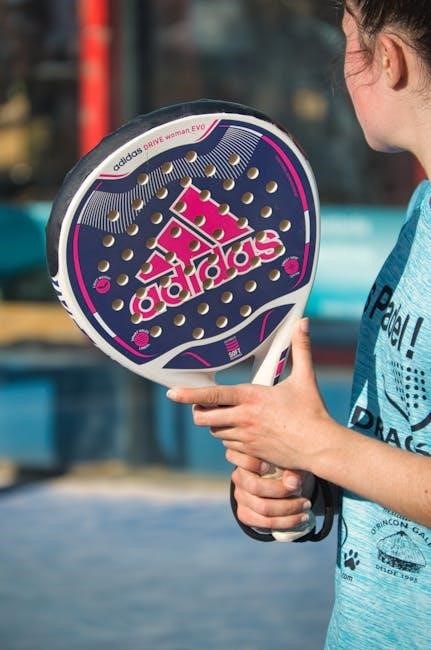
Popular Racquet Brands and Their Grip Sizes
Leading brands like Wilson, Head, and Babolat offer racquets across a spectrum of grip sizes, catering to diverse hand dimensions and playing preferences for all players.
Wilson Racquet Grip Sizes
Wilson, a dominant force in tennis, provides a comprehensive range of grip sizes, typically spanning from 4 1/8 inches to 4 5/8 inches, and sometimes even larger for specialized models. Their Pro Staff and Blade lines often feature standard sizes, while the Clash series may offer slightly more varied options to accommodate different hand sizes and playing styles.
Players should consult Wilson’s official sizing chart, considering both hand length and width. Many Wilson racquets allow for customization through overgrips or undersizes, enabling a personalized fit. It’s crucial to remember that grip size can influence control and power, so careful selection is paramount for optimal performance and comfort on the court.
Head Racquet Grip Sizes
Head racquets generally follow industry-standard grip sizing, ranging from 4 1/8 to 4 5/8 inches, though some models may deviate slightly. The Head Radical line caters to a broad range of players, offering common sizes like 4 1/4 and 4 3/8. Their Prestige series, favored by advanced players, often features smaller grips for enhanced feel and control.
Determining the correct Head grip size involves measuring hand circumference and considering playing style. Utilizing overgrips allows for fine-tuning, ensuring a comfortable and secure hold. Proper grip size minimizes strain and maximizes performance, contributing to a more enjoyable and effective tennis experience.
Babolat Racquet Grip Sizes
Babolat, a leading racquet manufacturer, provides a comprehensive range of grip sizes, typically spanning from 4 1/8 to 4 5/8 inches, accommodating diverse hand sizes and preferences. The Pure Drive line, known for its power and spin, commonly features 4 1/4, 4 3/8, and 4 1/2 inch grips. Babolat’s Pure Strike series, emphasizing control, often includes slightly smaller grip options.
Selecting the appropriate Babolat grip size is crucial for optimal performance and comfort. Players can utilize overgrips to customize the feel and ensure a secure, comfortable hold during intense play, minimizing the risk of injury and maximizing control.
Grip Size and Injury Prevention
Incorrect grip size significantly elevates the risk of tennis elbow and wrist pain, stemming from excessive gripping or inadequate shock absorption during ball impact.
Tennis Elbow and Grip Size
Tennis elbow, or lateral epicondylitis, frequently arises from repetitive strain on the wrist extensor muscles. A grip that’s too small forces players to grip the racquet tighter, increasing muscle stress and exacerbating this condition. Conversely, an overly large grip can compromise wrist stability, leading to compensatory movements and strain.
Proper grip size allows for a relaxed handhold, maximizing shock absorption and minimizing stress on the elbow joint. Regularly assessing and adjusting grip size, alongside appropriate technique, is vital for preventing and managing tennis elbow. Ignoring this connection can lead to chronic pain and hinder performance.
Wrist Pain and Grip Size
Incorrect grip size significantly contributes to wrist pain in tennis players. A grip that’s too small compels players to overgrip, restricting natural wrist movement and increasing strain on the joint. This can manifest as pain during serves, volleys, or groundstrokes. Conversely, a grip that’s too large can reduce wrist control, leading to instability and potential sprains.
Selecting the appropriate grip size promotes a relaxed wrist position, allowing for fluid motion and optimal shock absorption. Addressing grip size alongside proper technique and wrist strengthening exercises is crucial for preventing and alleviating wrist discomfort, ensuring long-term playing health.
Advanced Grip Considerations
Beyond standard sizing, contour grips offer enhanced comfort and hand-moldability. Hydration impacts tackiness; drier grips demand more force, potentially affecting wrist stability and control.
Contour Grip vs. Traditional Grip
Traditional racquet grips typically feature a consistent circumference along the entire handle, providing a uniform feel. However, contour grips introduce a unique element – varying thicknesses designed to better fit the natural contours of the hand.
These grips are often thicker in the heel and thinner towards the throat, promoting a more relaxed and comfortable hold. This design aims to reduce tension, enhance feel for the ball, and potentially minimize the risk of grip-related injuries like tennis elbow.
Contour grips can be particularly beneficial for players with unique hand shapes or those seeking a more customized feel, offering a departure from the standard cylindrical shape.
Hydration and Grip Tackiness
Grip tackiness, crucial for control, is significantly affected by hydration levels – both environmental and personal. A dry grip reduces friction, leading to slippage and diminished feel. Conversely, excessive moisture can make the grip overly slick, hindering performance.
Players should consider using overgrips to absorb sweat and maintain consistent tackiness. Regularly drying your grip during play is also vital. Proper personal hydration impacts sweat production, influencing grip feel throughout a match.
Maintaining optimal grip tackiness ensures a secure hold and maximizes control, contributing to a more effective and comfortable playing experience.
Resources for Finding Your Grip Size
Numerous online calculators and local tennis shops offer grip size assistance. Consulting a professional coach provides personalized recommendations for optimal racquet feel and performance.
Online Grip Size Calculators

Several websites provide convenient online grip size calculators, utilizing palm measurements or existing grip information to suggest appropriate sizes. These tools offer a quick starting point, though accuracy can vary depending on the calculator’s algorithm and user input precision.
Popular options often ask for palm circumference or length, then cross-reference this data with standard grip size charts. Remember these are estimations; individual preferences and playing styles significantly influence the ideal grip. Always consider these results as a guide, not a definitive answer, and supplement with in-person testing whenever possible.
Local Tennis Shop Assistance
Visiting a local tennis shop provides invaluable personalized assistance in determining your optimal grip size. Experienced staff can physically measure your hand and observe your grip on a racquet, offering tailored recommendations based on your unique characteristics.
They can also allow you to demo racquets with different grip sizes, enabling you to feel the difference firsthand. This hands-on approach is often more accurate than online calculators or self-measurement, ensuring a comfortable and effective fit. Don’t hesitate to leverage their expertise!
Professional Tennis Coach Recommendations
A qualified tennis coach possesses a keen eye for technique and can assess your grip needs based on your playing style and biomechanics. They observe how you hold the racquet, your swing path, and overall game, identifying potential issues related to grip size.
Coaches can offer personalized recommendations, considering factors like hand size, strength, and preferred grip type. Their guidance goes beyond simple measurement, focusing on optimizing your performance and minimizing the risk of injury. Seek their expert opinion for a truly customized fit.
Finding the ideal grip size is a personalized journey; experimentation is key. Prioritize comfort, control, and injury prevention for optimal performance on the court.
Recap of Key Grip Size Considerations
Ultimately, selecting the correct tennis racquet grip size isn’t a one-size-fits-all solution. Consider your hand dimensions – length and width – as primary factors. Playing style also matters; aggressive baseliners might prefer different grips than serve-and-volley players.
Remember to account for potential hand swelling during play and explore options like overgrips or undersizes for fine-tuning. Don’t ignore discomfort; it’s a signal something is amiss. Prioritize a grip that feels natural and allows for a relaxed, yet controlled, swing.
The Importance of Experimentation
Finding the ideal grip size often requires trial and error. What works for one player won’t necessarily work for another, even with similar hand sizes. Don’t hesitate to test different sizes, utilizing overgrips or undersizes to achieve a personalized fit.
Pay close attention to how each grip feels during actual play, not just a static hold. Observe your control, power, and comfort levels. Be patient and methodical; small adjustments can make a significant difference in your game and overall enjoyment of tennis.